
This series on historical views of the soul has demonstrated that every educational philosophy necessarily relies on a pre-existing view of the human person. Anthropology will inevitably inform pedagogy. In our last installment, we reached a dangerous crossroads in the seventeenth century with René Descartes, who performatively severed the human person into two isolated substances: res cogitans (the thinking mind) and res extensa (the extended body). By stripping the body of its vital, organic relation to the mind, Descartes unwittingly birthed a fragmented “bloated head” pedagogy that treats the student as a detached ghost operating an accidental machine, reducing education to filling an intellectual container rather than forming a holistic, living person.
To make progress after this modern fracturing, we must take a progressive step backward. As C. S. Lewis astutely noted in Mere Christianity:
“We all want progress. But progress means getting nearer to the place where you want to be. And if you have taken a wrong turning, then to go forward does not get you any nearer. If you are on the wrong road, progress means doing an about-turn and walking back to the right road; and in that case the man who turns back soonest is the most progressive man.” (Lewis 1952, p. 54)

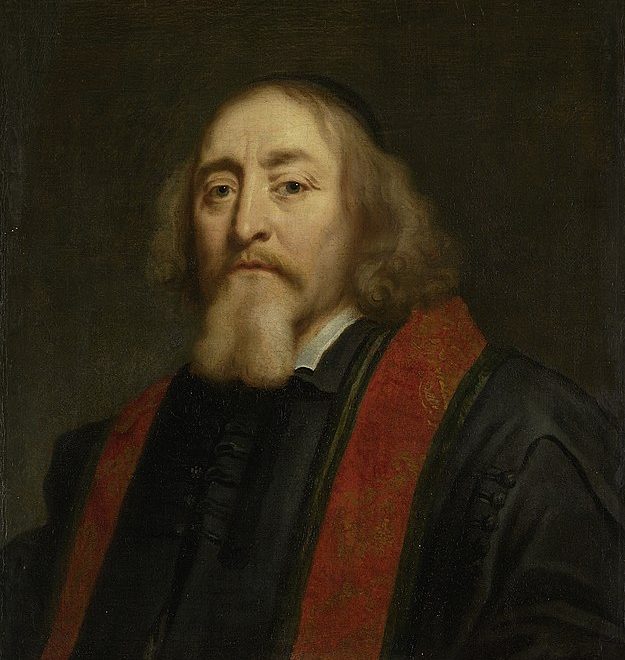
To find that right road, we turn our gaze back to an older contemporary of Descartes who stood as the early modern era’s true “Great Mediator”: the Czech teacher, educator, philosopher, and bishop, John Amos Comenius (1592–1670). Born in Moravia, Comenius’s life was deeply impacted by the severe trauma of religious war and exile. Driven from his homeland by the devastation of the Thirty Years’ War, watching his first wife and children die under harsh refugee conditions, and witnessing his massive libraries burned, he became a fierce advocate for universal peace, order, and cosmic harmony. Serving as a bishop of the Unity of the Brethren, a Protestant denomination rooted in the theology of Jan Hus, Comenius channeled his deep theological convictions into a systemic overhaul of schooling, for which reason he has been called the father of modern education (despite the gap between his actual views and that abstraction).
His landmark pedagogical work, The Great Didactic (Didactica Magna), written between 1628 and 1632 and published in English by M. W. Keatinge, offered a stunning third way forward into modern education. Comenius, influenced by Francis Bacon’s empiricism, fully embraced the rigorous, systematic observation of the nascent scientific age but anchored it firmly within a robust Christian anthropology. For Comenius, the human soul is neither a Cartesian ghost nor an empty, blank slate to be filled from without, but a localized microcosm possessing an intrinsic, infinite capacity designed to actively fathom and grasp the entirety of the cosmos. In this way, Comenius represents the last great early modern attempt to establish a universal method of schooling that remains fundamentally anchored in the Imago Dei. His view of the human soul is therefore the appropriate antidote to the poison of Cartesian dualism.

The Mind as a Seed or Kernel
In Chapter 5 of The Great Didactic, titled “The Seeds of These Three (Learning, Virtue, and Piety) are Naturally Implanted in Us,” Comenius directly challenges the institutional habit of trying to beat knowledge or goodness into children from without. In an age when many educational theorists believed that human beings were born naturally evil or entirely empty, Comenius asserts that children possess an innate, God-given craving for knowledge, beauty, and order. Relying on the rich, biological metaphor of a seed, he describes the child’s soul as an exquisite microcosm that inherently contains the structural blueprint of its own spiritual and intellectual destiny:
“Philosophers have called man a Microcosm or Epitome of the Universe, since he inwardly comprehends all the elements that are spread far and wide through the Macrocosm, or world at large…. The mind, therefore, of a man who enters this world is very justly compared to a seed or to a kernel in which the plant or tree really does exist, although its image cannot actually be seen…. It is not necessary, therefore, that anything be brought to a man from without, but only that that which he possesses rolled up within himself be unfolded and disclosed, and that stress be laid on each separate element.” (Comenius 1896, p. 43)
This biological metaphor fundamentally relies upon and honors the Aristotelian hylomorphic tradition. In Part 3 of this series, we saw how Aristotle defined the soul as the substantial form of a natural, organized body—the primary grade of actuality that drives a living entity to fulfill its potential. Comenius relies implicitly on this hylomorphic insight, recognizing that the soul acts as an internal organizing principle. The seed or kernel does not look like the fully grown tree, yet it possesses an intrinsic, formal teleology that directs its physical matter to unfold into its mature nature. By comparing the mind to a seed or a kernel, Comenius rejects the Cartesian view of the mind as a separate substance accidentally trapped in a bodily machine, returning instead to an organic unity where the soul naturally expresses its vital operations through physical development.
Consequently, this hylomorphic orientation completely transforms the baseline posture of the teacher. If the soul is an unfolding form rather than an empty container, the instructor’s role shifts from an industrial factory worker stamp-pressing information onto raw material to a master gardener. The gardener does not manufacture the life of the plant; rather, he cultivates the environmental conditions, clears away obstructions, and nourishes the soil so that the latent potentiality within the seed or kernel can bloom. Education becomes an act of gentle cultivation, cooperating with the natural, God-given capacities already “rolled up” within the child’s unified nature (Comenius 1896, p. 43).

The Mind as a Perceptual Abyss
While Comenius utilizes natural, biological metaphors to ground his pedagogy, his ultimate view of the soul is profoundly transcendent and theological. Because the human person is explicitly understood as the Imago Dei, the soul’s capacity for universal knowledge is fundamentally limitless. Essentially Comenius expands upon St. Augustine’s classical concept of the soul’s spiritual magnitude, which we explored in Part 6 as an incorporeal substance whose very nature is oriented toward Unchanging Truth. Comenius demonstrates that the human mind refuses to be bound by the physical constraints of time, space, or material volume:
“It is evident that man is naturally capable of acquiring a knowledge of all things, since, in the first place, he is the image of God…. So unlimited is the capacity of the mind that in the process of perception it resembles an abyss. The body is enclosed by small boundaries; the voice roams within wider limits; the sight is bounded only by the vault of heaven; but for the mind, neither in heaven nor anywhere outside heaven, can a boundary be fixed. It ascends as far over the heavens above as below the depths beneath, and would do so if they were even a thousand times more vast than they are; for it penetrates through space with incredible speed. Shall we then deny that it can fathom and grasp all things?” (Comenius 1896, pp. 41, 42)
This breathtaking passage highlights an implicit alignment with the Thomistic synthesis of body and spirit. In that article, we observed how St. Thomas Aquinas maintained that while the soul is the form of the body, it is a form that is “not fully immersed in matter.” Because human operations include intellective cognition—the ability to abstract universal concepts from physical particulars—the intellective power must be free from material limitations. Comenius mirrors this Thomistic balance perfectly: the body has “small boundaries,” but the mind operates as a boundless “abyss” capable of containing the universal essences of all created things precisely because it is an immaterial reflection of an omniscient God. As he explains further in the prior context, human beings possess “a lucid mind, which, like a spherical mirror suspended in a room, reflects images of all things that are around it” (Comenius 1896, p. 41).
This infinite capacity forms the absolute foundation of Comenius’s pansophic (Greek for “all-wisdom”) pedagogical theory—his vision of teaching “all things to all men.” Because the child’s soul functions as a perceptual abyss hungry to reflect God’s glory in all creation, education must fiercely resist narrow, reductionist, or purely utilitarian specialization. It insults the magnitude of the Imago Dei to limit schooling to localized job training or standardized test prep. Instead, a classical Christian curriculum must courageously present a wide, multi-faceted, and interconnected feast of the created order, satisfying the soul’s natural craving by displaying the ultimate cosmic harmony designed by the Creator.
The Mechanical Clockwork of the Soul
While maintaining this soaring, Augustinian theology of the Imago Dei, Comenius executes his most brilliant synthesising maneuver by adapting the premier metaphor of the burgeoning Scientific Revolution: clockwork. In the seventeenth century, the mechanical clock was the premier high-tech marvel of Europe—the defining symbol of order, predictability, and interlocking design. To explain how the internal faculties of the soul interact and maintain moral alignment within daily life, he details the soul in terms of an early modern mechanical model:
“In the movements of the soul the most important wheel is the will; while the weights are the desires and affections which incline the will this way or that. The escapement is the reason, which measures and determines what, where, and how far anything should be sought after or avoided. The other movements of the soul resemble the less important wheels which depend on the principal one. Wherefore, if too much weight be not given to the desires and affections, and if the escapement, reason, select and exclude properly, it is impossible that the harmony and agreement of virtues should not follow.” (Comenius 1896, p. 47)
Here, Comenius masterfully links ancient virtue formation with modern systemic thinking, utilizing the clockwork image to demonstrate the internal structural order of human nature. He calls the reasoning faculty an escapement, which is the mechanical device found in a clock that converts the continuous rotational force of a power source (like a swinging weight or a mainspring) into a regulated, periodic impulse. “The most important wheel is the will,” or choosing power, which is influenced by the weights of the desires and affections. This functional description sits in beautiful, direct harmony with Plato’s tripartite soul and the Thomistic view of the internal senses and passions. While we only touched on it in Part 7, the Thomistic synthesis argues that the passions and desires are not inherently evil or things to be entirely eradicated (as the extreme Stoics claimed), but are God-given capacities meant to be rationally ordered and directed toward the good. Comenius’s clockwork metaphor illustrates this exact balance: the desires and affections act as the vital “weights” providing the raw momentum and energy of life, but they require the “escapement” of reason to measure, regulate, and govern their swing.
If the escapement of reason is broken or uncalibrated, the weights drop violently, throwing the principal wheel of the will into chaotic, disordered motion. Conversely, if too much weight is given to raw passion without rational mediation, moral breakdown is inevitable. True human freedom and virtue do not require suppressing our natural affections, but rather ordering them rationally. When reason functions accurately as a sound escapement, it harmonizes the momentum of our desires, ensuring that the human will moves smoothly to produce an enduring, virtuous life. Thus Comenius’s use of the mechanical metaphor of clockwork has the opposite effect of Descartes’s reductionistic comparison of the body’s inner workings to “no less and no more than the movement of a clock” (Treatise on Man, p. 113). Comenius uses it to reaffirm the Thomistic synthesis, while Descartes had used it to rip body and soul apart.

The Pansophic Classroom
In addition to maintaining the hard-won insights about the soul from the tradition, Comenius’s pansophic vision of the soul calls for a number of revolutionary practices in the classroom. First, we must intentionally shift our instructional methods from a paradigm of “pouring in” to one of “drawing out.” If the student’s mind is a living seed or kernel containing a latent, hylomorphic principle of life, our daily lessons should minimize tedious, passive lecturing that treats children like empty buckets. Instead, teachers should utilize narration, socratic dialogue, and high interaction or inquiry-based methods that force students to actively unfold what is rolled up within them. We must provide an abundant feast of rich conceptual “soil”—through living books, hands-on nature study, and mathematical wonder—allowing their internal intellectual capacities, like a spherical mirror, to do the active, vital work of mental digestion, integration, and growth.
Second, understanding the soul as a beautifully balanced clockwork mechanism reminds us that classroom leadership is fundamentally an interior task of ordering affections, not an exterior exercise in behaviorist compliance. We cannot truly form or redirect a student’s “will” through mechanical carrot-and-stick rewards, yelling, or enforcing blind obedience. Instead, we must help them adjust their “weights”—their underlying desires, loves, and affections. By explicitly training the “escapement” of student reason through moral reflection, regular habit formation, and highlighting the intrinsic beauty of truth, we equip them with the internal capacity for self-regulation and structural moral harmony.
Finally, we must remain fiercely committed to a broad, integrated, and expansive curriculum that honors the true magnitude of the Imago Dei. If the human mind is a perceptual abyss, we drastically insult our students when we truncate their education to serve localized economic utility or narrow specialization. Comenius famously modeled this expansive vision by publishing the Orbis Sensualium Pictus (1658), the world’s first major children’s picture textbook, which systematically guided young minds through the entire “visible world” from the alphabet to the deep arts and sciences. This project recognizes both the soul’s transcendence and, in true hylomorphic fashion, its proper learning through embodied senses and the imagination. We must boldly protect a vast curriculum where science, history, music, literature, and theology explicitly speak to one another, honoring the boundless capacity of the child’s soul to reflect the multi-faceted glory of a unified God.

Re-integrating the Fractured Soul: Comenius Against Descartes
Ultimately, Comenius’s pansophic vision offers the historical antidote to the Cartesian fragmentation that continues to plague modern education. Where Descartes left us with a severe dualism—separating the ghost from the machine—Comenius stands on the shoulders of the Aristotelian and Thomistic synthesis to reassert that the human being is a unified, living person. Descartes’s split forced pedagogy to look in two opposing and unhelpful directions: a rationalistic isolation that treats the mind as a disembodied computer to be programmed, or a materialist behaviorism that reduces the child to a biological machine to be trained through external stimuli.
Comenius brilliantly resolves this tension by showing that the systematic, mechanical order of the early modern world can be harmonized with the mystery of the soul. By framing the mind as an organic “seed” rather than an accidental tenant in a body, he maintains that the sensory world is the natural, God-given gateway through which the soul expands. His clockwork metaphor bridges this gap, showing that our structural mechanisms and our internal desires are designed to interact in perfect systemic alignment under the governance of reason.
By walking backward to stand with Comenius, classical Christian educators can move forward onto the right road. He provides concrete historical evidence that we can build an orderly, effective, and beautifully systematic method of schooling without ever losing our souls. He shows us how to close the artificial Cartesian divide in our classrooms, allowing our students to encounter the entire visible world as unified, living persons created as reflections of an infinite God.

References
Comenius, John Amos. 1887. The Orbis Pictus of John Amos Comenius. Syracuse, NY: C.W. Bardeen. (Original work published 1658).
Comenius, John Amos. 1896. The Great Didactic of John Amos Comenius. Translated by M. W. Keatinge. London: Adam and Charles Black. (Original work published 1649).
Descartes, René. Treatise of Man, trans. Thomas Steele Hall. Cambridge, MA: Harvard University Press, 1972).
Lewis, C.S. 1952. Mere Christianity. London: Collins.
Lorenz, Hendrik. 2024. “Ancient Theories of Soul.” The Stanford Encyclopedia of Philosophy, edited by Edward N. Zalta and Uri Nodelman. URL = https://plato.stanford.edu/archives/sum2024/entries/ancient-soul/.

Leave a Reply