
In our series on “The Soul of Education,” we have adopted the philosophical procedure of the Stoic Athenodorus: when presented with a ghost in a haunted house, he calmly followed it out into the courtyard and later dug up and reburied the remains of a hidden and unresolved murder. By an analogy, we too are attempting to uncover and resolve the remains of historical views of the soul that continue to haunt contemporary education. As we reached the modern era, we saw how René Descartes performatively severed the human person into a thinking mind and an extended body–a move with disastrous, if unintended, effects on education. In contrast, John Amos Comenius bridges this rift through his pansophic, hylomorphic vision of the child’s soul as a perceptual abyss and spherical mirror. For Comenius, the embodied human soul contains the whole world within it, created as it is in the image of the Creator God. Unfortunately, the modern era largely embraced the Cartesian split rather than the Comenian harmony.
But this haunted tale has not yet reached its most extreme climax. If Descartes transformed the human soul into an isolated “ghost in a machine,” the turn of the twentieth century witnessed the final, tragic liquidation of that ghost altogether. To understand the modern confusion in our classrooms, we must follow the ghost into the murky waters of psychoanalysis. It is in the work of Sigmund Freud (1856–1939) that the classical vision of the soul undergoes its most radical disintegration.

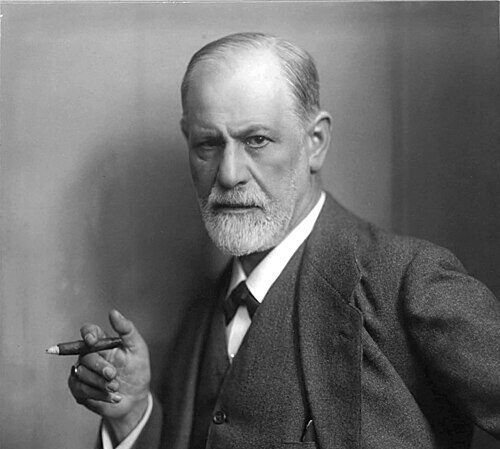
Sigmund Freud was an Austrian neurologist and the founder of psychoanalysis, working primarily in Vienna during a period increasingly dominated by the worldview of scientific materialism. Trained in medicine and physiological research under Ernst von Brücke, Freud grew up under the intellectual aegis of German Darwinism. He sought to bring the study of the human mind under the strict domain of evolutionary naturalism, attempting to map the mechanics of human behavior without recourse to divine revelation or traditional metaphysics. His pioneering work on dreams, neuroses, and the unconscious mind would radically reshape twentieth-century psychology, replacing the traditional concept of an immortal, rational soul (psyche) with a mechanical, biological “mental apparatus” driven by subterranean instincts.
The Tripartite Echo: Plato’s Harmony Inverted
At first glance, Freud’s model of the human psyche appears striking in its structural resemblance to classical antiquity. Indeed, Freud’s division of the mind into the Id, Ego, and Superego directly echoes Plato’s tripartite soul in the Republic. As we saw in part 1, Plato posited that the soul consists of three distinct parts: the rational (logistikon), the spirited (thymoeides), and the appetitive (epithymetikon). For Plato, moral health and justice (dikaiosyne) occur when the rational charioteer, supported by the spirited lion, governs the appetitive, “many-headed beast.”
Freud adopts this threefold vision of the soul, but he radically re-engineers its ontology, its internal hierarchy, and its ultimate destination. Where Plato envisioned structural order oriented toward transcendent Truth, Freud presents a deterministic battleground where order is an illusion and transcendence is abolished.
In the Freudian revision, Plato’s appetitive beast becomes the Id—an overwhelming, unconscious reservoir of biological drives operating on the “pleasure principle.” In his mature thought, Freud structured this subterranean realm around the tragic confrontation between Eros (the unifying life instinct) and Thanatos (the silent, destructive death instinct) (Freud 1930, sec. VI). Far from being a manageable part of a larger spiritual whole that can be disciplined toward virtue, the Id forms the primary, volatile substance of human nature in Freud’s thinking. We can see how this move develops naturally from his evolutionary assumptions: if human life arose by chance through biological complexity, then the essence of the psyche is an animalistic unconscious, fundamentally beyond our full rational control (Freud 1930, sec. I).
Plato’s spirited lion—the natural ally of reason concerned with honor and moral outrage—is then re-engineered by Freud into the Superego. Rather than serving as an ally to the rational mind, Freud’s Superego functions as a harsh, internalized police force born of introjected social authority and redirected aggression. For Freud, the Superego comes about as a result of the need for “civilization” to repress some of its members’ individual desires for the sake of effective social organization and civilizational accomplishments. It does not illuminate moral truth but instead torments the individual with irrational guilt and neuroses. On this reading, all morality has been effectively relegated to the will of the stronger, which is the exact opposite of Plato’s conclusion in The Republic.
Most devastatingly, Plato’s rational charioteer—the sovereign “man within” capable of wisdom and oriented toward beatitude—is reduced in Freud’s system to the fragile Ego. The Ego is not an independent, spiritual substance tasked with ruling the soul, but merely a surface “facade” or outer layer of the biological Id. Under Freud’s pen, rational self-governance is exposed as an illusion, and the conscious mind becomes a passive observer receiving mere “scraps of information” while struggling to negotiate between the primal urges of the Id and the oppressive tyranny of the Superego.

The Primacy of the Unconscious and the Dethronement of Reason
The fundamental premise of Freud’s revolution is his insistence that human mental life is governed not by conscious reason, but by a vast, uncharted unconscious. In his Introductory Lectures on Psycho-analysis, Freud explicitly challenges the philosophical tradition that equated the mind with conscious thought:
“The first of these displeasing propositions of psycho-analysis is this: that mental processes are essentially unconscious, and that those which are conscious are merely isolated acts and parts of the whole psychic entity. . . . The psycho-analytical definition of the mind is that it comprises processes of the nature of feeling, thinking, and wishing, and it maintains that there are such things as unconscious thinking and unconscious wishing.” (Freud 1922, lect. 1)
Now we must, of course, concede the incredible complexity of the human brain, as well as the influence of numerous instinctive drives and urges that the Apostle Paul would have referred to under the term “flesh” (sarx). Freud’s insistence on how fleshly the human soul really is can serve as a real corrective to a Cartesian disembodied intellectualism which had caught the Enlightenment imagination. But by redefining the psyche as an arena dominated by subterranean desires, Freud effectively dethrones the rational intellect. Rationality is only the veneer or mask of “civilized” man, pretending to be more than the hunted and haunted brute he truly is.
For Aristotle and Aquinas, the intellect (nous or intellectus) was the highest faculty of the soul, uniquely capable of apprehending universal truths and guiding the will toward the Good. For Freud, however, conscious reason is stripped of its sovereignty. The conscious self, the Ego, is not an independent, spiritual substance, but merely an outward projection or surface modification of the primitive, biological Id:
“Normally, there is nothing of which we are more certain than the feeling of our self, of our own ego. This ego appears to us as something autonomous and unitary, marked off distinctly from everything else. That such an appearance is deceptive, and that on the contrary the ego is continued inwards, without any sharp delimitation, into an unconscious mental entity which we designate as the id and for which it serves as a kind of facade.” (Freud 1930, sec. I)
In this framework, the Ego is reduced to a besieged servant. Rather than ruling the soul with wisdom, the rational mind is forced to negotiate a tenuous truce between the relentless demands of the biological Id, the harsh penalties of the Superego, and the constraints of external reality. As Freud famously declared, psychoanalysis serves to prove to the human ego that “he is not even master in his own house, but that he must remain content with the veriest scraps of information about what is going on unconsciously in his mind” (Freud 1922, lect. 18).
As a prophetic critique of unredeemed men and women, this claim is only too true in countless individual cases. But insofar as it proposes to do justice to both the glory and the shame of the human condition, it represents a criminal act of treason against the soul.

The Abolition of Transcendent Morality and Immortality
Having subjugated reason to unconscious impulse, Freud turns his attention to moral conscience. In the Christian classical tradition—from Augustine’s Confessions to Mason’s Ourselves—conscience is understood as an interior voice aligned with God’s moral law, guiding the personality toward righteousness. Freud completely naturalizes and materializes this capacity, renaming it the “Superego.”
In Civilization and Its Discontents, Freud explains that the Superego is created when an individual’s outward aggressive energy is blocked by societal rules and turned inward against the Ego:
“His aggressiveness is introjected, internalized; it is, in point of fact, sent back to where it came from—that is, it is directed towards his own ego. There it is taken over by a portion of the ego, which sets itself over against the rest of the ego as super-ego, and which now, in the form of ‘conscience’, is ready to put into action against the ego the same harsh aggressiveness that the ego would have liked to satisfy upon other, extraneous individuals.” (Freud 1930, sec. VII)
Far from being a divine spark or a rational guide, the Superego is an ambivalent, tyrannical garrison stationed within the mind. Here Freud unveils the tragic paradox at the heart of naturalistic morality: instinctual renunciation does not appease the conscience; it feeds it (Freud 1930, sec. VII). Because the omniscient Superego judges hidden intentions as strictly as outward deeds, every act of moral self-restraint redirects aggressive energy inward, heightening the Superego’s severity against the Ego. Consequently, in Freud’s system, the more virtuous a person attempts to be, the more distrustful, harsh, and tormenting their conscience becomes (Freud 1930, sec. VII).
Freud extends this psychological mechanism to macro-society through the creation of a “cultural superego,” which sets up impossible ethical demands (such as the command to “love thy neighbour as thyself”) that disregard the biological limits of the human apparatus (Freud 1930, sec. VIII). Thus, morality is entirely divested of transcendence. Virtue is no longer the proper ordering of human loves toward God (as in Augustine’s ordo amoris), nor is it the joyful path to human flourishing; it becomes a pathological compromise reached to avoid the crushing penalties of social and internal aggression (Freud 1930, sec. VII). Even the greatest cultural achievements of the arts and sciences are, in the mind of Freud, nothing more than the result of redirected sexual energies.
Finally, Freud completes the trajectory initiated by ancient materialist atomism. Because Freud views the psyche as an apparatus inextricably bound to biological drives and physical neural mechanisms, he denies the immortality of the soul, just like the Epicureans of old, but at a more advanced stage of their disease. The individual is no longer an eternal spirit created as the Imago Dei, destined for beatitude or ruin, but a temporary biological organism whose interior life ceases when the biological machine stops. By this point in our haunted tale, the ghost has been fully liquidated.

The Evolutionary Grounding and its Philosophical Vulnerability
To fully grasp the claims of Freud’s anthropology, one must recognize how thoroughly his model of the psyche is built upon evolutionary assumptions. Coming of age shortly after the publication of Charles Darwin’s On the Origin of Species, Freud viewed the human mind not as a divine creation made in the image of God, but as an evolutionary precipitate: a biological organism shaped by millions of years of ancestral survival drives. In his Introductory Lectures on Psycho-analysis, Freud frames the unconscious mind as a primitive, instinctual reservoir that preserves “residues of valuable, even necessary, stages in human evolution” and retains the “infantile mental life” of both the individual and the species (Freud 1922, lect. 1). What classical philosophy viewed as the higher, spiritual capacities of the soul, Freud has recast as mere evolutionary adaptations designed to manage primitive animal impulses.
However, this evolutionary grounding exposes Freud’s system to a profound philosophical vulnerability—a fatal circularity often described as the “evolutionary argument against naturalism.” If human mental processes are merely the accidental byproducts of blind, evolutionary survival drives, then conscious reason itself is stripped of its connection to objective truth. Reason becomes a mere tool for biological adaptation rather than a faculty designed for apprehending reality. Freud has effectively climbed onto the branch of supposed scientific rationality, only to saw off the very surface holding his own weight.
Yet Freud relies entirely upon the validity of his own conscious, rational analysis to establish his theory of psychoanalysis! If the mind is governed by irrational, unconscious evolutionary impulses, on what grounds can Freud claim that his own rational conclusions regarding the mind are objectively true? By reducing reason to an evolutionary survival mechanism, Freud unwittingly undermines the same rational foundation required to validate his own “scientific” system, leaving his entire psychological structure built upon intellectual quicksand.
The Pedagogical Crisis: The Fallout of a Liquidated Soul
When educators unwittingly absorb Freudian assumptions, the baseline posture of the classroom undergoes a catastrophic shift. If the human soul is merely an unconscious, biological struggle, then classical Christian pedagogy becomes unthinkable. We see the consequences of this anthropological shift in three major areas of modern schooling:
- From Character Formation to Therapeutic Conditioning: When moral instruction is viewed through a Freudian lens as a driver of subconscious guilt and neurosis rather than a pathway to spiritual health, schools abandon the cultivation of traditional virtues. If moral effort merely intensifies an aggressive Superego (Freud 1930, sec. VII), then demanding high moral standards of students appears cruel or counterproductive. Education consequently ceases to be a discipline of the will and habit training aimed at the Good; instead, it devolves into emotional therapy, instinctual containment, and psychological management. The odd mixture of safe spaces, behavioral conditioning, and the social affirmation of vices become the norms of contemporary schooling.
- The Erosion of Student Responsibility: If the conscious mind is “not master in his own house” and is merely a facade driven by hidden complexes, we can no longer appeal to a student’s rational capacity or moral agency. The student is transformed from a responsible personal agent into a passive victim of unconscious forces, environmental conditioning, or neurochemical imbalances. The ruling ideology of the moment fills the void of individual agency, and group-think, rather than genuine intellectual freedom, is the result.
- The Reduction of Knowledge to Sublimation: In a classical paradigm, knowledge is the natural food of the soul, illuminating the intellect and expanding its capacity for wisdom and worship. In a Freudian paradigm, intellectual and artistic pursuits are merely “sublimations”—diverted sexual or aggressive energies redirected toward socially acceptable ends. Great books, history, and science are no longer encountered as expressions of objective truth and beauty, but as coping mechanisms for human discontent. Needless to say, this turns the educational project into a shallow posturing aimed at “college and career readiness,” rather than a transcendent enterprise valuing truth for its own sake.

Toward an Integrated Pedagogy: Resisting the Deterministic Dead End
To rescue our classrooms from this modern mess, classical Christian educators must boldly reject the deterministic materialism of Freud. We must recognize that treating students as biological machines driven by dark, unconscious urges inevitably leads to behaviorist manipulation and despair.
To counter this Freudian reductionism, classical Christian schools must implement three intentional pedagogical commitments:
- Assert Rational and Personal Agency: We must treat students as unified, rational agents capable of real self-governance. While acknowledging that human beings possess physical appetites and emotional impulses, we must reject the notion that consciousness is a helpless facade. Through Charlotte Mason’s practice of “the Way of the Will” and “the Way of the Reason,” we must teach students that they can command their attention, evaluate their thoughts, and choose what is right regardless of passing feelings or unconscious suggestions.
- Restore Transcendent Grounding to Conscience: We must untangle the moral conscience from Freudian guilt. Classroom leadership should not rely on psychological manipulation, shame, or arbitrary power, which only feed a pathological Superego. Instead, we must point students to the objective, loving truth of God’s law, helping them see that true moral order brings freedom, peace, and human flourishing. Moral judgments are not the mere whims of an oppressive society impinging on human freedom, but represent intellectual claims regarding the truth about human nature and relationships.
- Nourish the Soul with Great Ideas: We must refuse to reduce learning to utilitarian skill or psychological sublimation. Because the human student is an immortal soul created for communion with God, the mind requires a generous, varied diet of living ideas from every area of God’s variegated creation. We must present history, literature, mathematics, and science as glimpses of cosmic harmony, satisfying the soul’s innate hunger for truth, goodness, and beauty.
Descartes left us with a fragmented thinker, and Freud left us with a fractured animal. Neither vision of the soul can sustain a truly humanizing education. As we conclude this stage of our journey through the courtyard of ideas, we see that the liquidation of the soul leaves the modern classroom haunted by emptiness. In our final installment, we will turn to Charlotte Mason, whose foundational axiom (”Children are born persons”) provides the ultimate antidote to modern reductionism, restoring dignity, unity, and transcendence to the soul of education.

References
Freud, Sigmund. (1922) Introductory Lectures on Psycho-analysis. Translated by Joan Riviere. London: George Allen & Unwin Ltd, 1922.
Freud, Sigmund. (1930) Civilization and Its Discontents. Translated and edited by James Strachey. New York: W. W. Norton & Company, 1961.
Plato. Republic. Translated by G. M. A. Grube. Revised by C. D. C. Reeve. Indianapolis: Hackett Publishing Company, 1992.
Leave a Reply