
In our series on “The Soul of Education,” we have been systematically exploring historical views of the soul, uncovering their impact on educational philosophy. Our modus operandi relies on an awareness of the fact that anthropology inevitably affects pedagogy: our view of what a human being is trickles down into how we propose to educate that person. In our previous article, like the Stoic Athenodorus who bought a haunted house, we followed the ghost of the soul into its darkest, most fragmented modern manifestation: the evolutionary materialism of Sigmund Freud. In Freud’s psychoanalytic model, the traditional, immortal soul (psyche) was liquidated into a mechanical, biological “mental apparatus” governed by dark unconscious impulses, leaving the conscious Ego as a helpless servant “not even master in his own house.”
When schools unwittingly embrace this Freudian reductionism, education devolves from the classical formation of character into therapeutic conditioning, behavioral management, and instinctual containment. Having severed the human person from transcendent moral truth and spiritual agency, the modern classroom is left haunted by an empty, mechanistic view of the child.
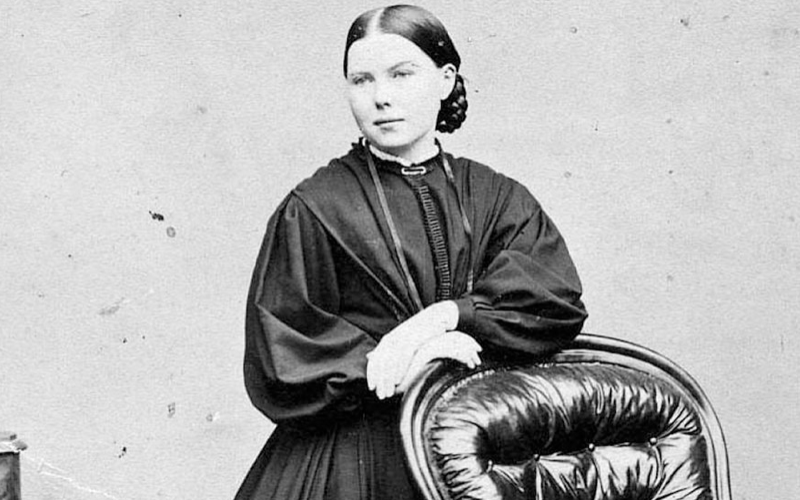
To rescue our classrooms from this modern impasse, we turn back the clocks a decade or so to one of Freud’s older contemporaries: the British Christian educator Charlotte Mason (1842–1923). Writing across the late nineteenth and early twentieth centuries—a period when industrialization, behaviorist psychology, and Freudian psychoanalysis were beginning to radically reshape Western culture—Mason mounted a prophetic defense of human nature. Her foundational axiom, “Children are born persons,” provides the ultimate antidote to modern Freudian reductionism, synthesizing the classical and Christian traditions to restore dignity, unity, and transcendence to the soul of education.
The Life of Charlotte Mason: A Prophet of Personhood
To appreciate the weight of Charlotte Mason’s educational revolution, one must understand the historical context in which her work unfolded. Born in 1842, Mason was orphaned at the age of sixteen. She subsequently trained at the Home and Colonial School Society in London, an institution pioneering new approaches to elementary education. Her early professional life as a headmistress at Davison School in Worthing and later as a lecturer at Bishop Otter College in Chichester gave her decades of firsthand observation of children across diverse social classes.

In 1891, Mason founded the House of Education in Ambleside, England, a training college for governesses and teachers that became the vibrant center of the Parents’ National Educational Union (PNEU). It was during these years in the Lake District, surrounded by the natural beauty that had inspired Wordsworth, that Mason formulated her comprehensive philosophy. At a time when Victorian schooling was increasingly splitting into rigid utilitarian training for the working classes and elite classical drilling for the aristocracy, Mason made a startling discovery: children of all social backgrounds, from the children of educated elites to the sons and daughters of a humble mining village, responded with equal wonder and intellectual vigor when offered a rich, liberal education grounded in living books.
Living through the devastation of World War I, Mason watched as modern “civilization” and scientific efficiency failed to prevent moral catastrophe. She recognized that the crisis of the modern world was fundamentally an anthropological crisis. Until her death in 1923, Mason labored to articulate an educational framework that defended the sacred dignity of every child against the encroachments of utilitarianism, behaviorism, and psychological determinism.

Person vs. Soul: Continuing the Classical Tradition
As we evaluate Charlotte Mason’s view of the soul in the context of the journey we have been on, a terminology question naturally arises. Why does Mason frame her foundational principle around the word ‘person’ (“Children are born persons”) rather than the traditional word ‘soul’? Has she abandoned traditional Christian terminology for modern philosophical novelty? Nothing could be further from the truth.
The fact is that by the late nineteenth century, the traditional terms ‘soul’ and ‘mind’ had become entangled in a jumbled mess of competing philosophical assumptions. On one hand, Cartesian dualism had reduced the ‘mind’ to an isolated, disembodied thinking entity (res cogitans). On the other hand, emerging materialist psychology and neurophysiology were attempting to reduce the ‘soul’ to a series of physical brain reflexes or unconscious, biological drives. The terminology itself no longer conveyed what Augustine and Aquinas had expressed.
By choosing the word ‘person’, Mason was not abandoning the classical Christian doctrine of the soul; rather, she was restoring it to its full, unified, and relational magnitude. In Christian theology, specifically shaped by the Trinitarian and Christological controversies of the early Church Fathers, the term ‘person’ (persona or hypostasis) signified an irreducible, conscious, and relational agent.
Far from breaking with the Great Conversation, Mason’s use of personhood seamlessly continues and protects the classical trajectory:
- It honors Plato’s insistence on an immortal, transcendent spiritual capacity that cannot be reduced to physical appetites.
- It incorporates Aristotle’s hylomorphic insight that the soul is the living form of an embodied organism, operating through real physical and sensory gateways.
- It reflects Augustine’s vision of the soul as a spiritual substance whose “magnitude of power” lies in its capacity for virtue, self-governance, and incorporeal ascent toward God.
- It echoes Aquinas’s synthesis of the soul as a unified essence of form and substance, possessing distinct powers oriented toward beatitude.
By declaring that children are born persons, Mason recaptured this rich, integrated heritage in a single, accessible phrase, asserting that a child is neither a biological machine nor a blank slate, but a complete, living and embodied spirit from the very beginning.
The Revolutionary Credo: Reclaiming the Personhood of the Child
The starting point of Charlotte Mason’s entire educational philosophy is this radical affirmation of the child’s spiritual and intellectual completeness. In her final volume, Towards a Philosophy of Education, Mason insists that recognizing the personhood of the child requires nothing less than an intellectual conversion:
“I believe that the first article of a valid educational creed––’Children are born persons’––is of a revolutionary character; for what is a revolution but a complete reversal of attitude?” (Mason, Vol. 6, p. 27)
In calling this claim “revolutionary,” Mason was directly challenging the dominant psychological and educational theories of her day, which viewed the child either as a tabula rasa (“blank slate”) to be written upon by the teacher or as a primitive biological organism to be molded through mechanical training. In contrast to the popular notion that an infant is merely a mindless physical lump waiting to be given a mind by external educational effort, Mason drily challenges the prevailing assumptions of educators:
“So much we all know. But is the baby more than a ‘huge oyster’? That is the problem before us and hitherto educators have been inclined to answer it in the negative. Their notion is that by means of a pull here, a push there, a compression elsewhere a person is at last turned out according to the pattern the educator has in his mind. The other view is that the beautiful infant frame is but the setting of a jewel of such astonishing worth that, put the whole world in one scale and this jewel in the other, and the scale which holds the world flies up outbalanced.” (Mason, Vol. 6, pp. 33–34)
For Mason, education does not produce the mind, nor does it assemble a personality out of fragmented biological instincts. The child is created as an imago Dei—a unified spiritual organism endowed by God with all the capacities of personality, including a mind hungry for living ideas, an active reason, a moral conscience, and a capacity for spiritual communion with his Creator. Where Freud sees the infant as a reservoir of chaotic, instinctual drives (or Id) that must be constrained by external social repressions, Mason sees an immortal soul, fully equipped from birth with the spiritual potentials of human nature.

The Architecture of “Mansoul”: Reframing the Interior World
To understand how Mason answers the Freudian disintegration of the soul, we must examine her comprehensive ground-plan of human nature presented in Ourselves (Volume 4). Borrowing John Bunyan’s metaphor of the “Kingdom of Mansoul,” Mason maps the inner landscape of the person into four interconnected realms: the House of Body, the House of Mind, the House of Heart, and the House of Soul.
Unlike Freud’s model, which pits an irrational Id against a tyrannical Superego, leaving the Ego as a shattered mediator, Mason describes an integrated, hierarchical governance within the individual. In her framework, two sovereign powers are lodged within the human spirit to direct the kingdom: Conscience and the Reason.
- Conscience as an Instructed Judge: In a Freudian paradigm, conscience is reduced to the “Superego”: an aggressive, internalized police force born of social repression that torments the individual with irrational guilt. Mason completely restores the divine and rational dignity of conscience. Conscience is the interior judge (“Lord Chief Justice”) set within Mansoul to discern right from wrong. However, Mason emphasizes that conscience is not infallible in isolation; it requires regular, progressive instruction in moral law and truth through the light of Scripture and the tradition of moral wisdom.
- The Rational Mind: Contra Freud’s assertion that conscious reason is merely a superficial facade masking unconscious drives, Mason affirms that human beings possess an inherent capacity for clear, logical thought. However, she warns in her “Way of the Reason” that human reason is an instrument of demonstration rather than an infallible source of initial truth. Reason can prove any premise, true or false, that the heart or will accepts. Therefore, the primary duty of education is not merely training the intellect in logical argumentation, but ensuring that the initial premises accepted by the mind are grounded in divine truth and objective reality.
In this way, Mason incorporates modern (and Christian) critiques of the naive views of an infallible human conscience and reason, while at the same time maintaining the essential role of these faculties of the soul.

Correcting Freud: “The Way of the Will” and “The Way of the Reason”
The definitive point of divergence between Freudian psychoanalysis and Mason’s educational philosophy lies in their respective views of human agency. Freud’s biological determinism strips the human agent of true choice, depicting consciousness as a battleground of subterranean forces. Mason counters this deterministic dead-end by elevating the Will as the supreme, choosing agent of the human personality.
In Volume 6, Mason outlines “The Way of the Will” and “The Way of the Reason” as essential keys to self-knowledge and character formation:
“We who teach should make it clear to ourselves that our aim in education is less conduct than character; conduct may be arrived at, as we have seen, by indirect routes, but it is of value to the world only as it has its source in character…. It is time that we realised that to fortify the will is one of the great purposes of education.” (Mason, Vol. 6, p. 129)
For Mason, the Will is not equivalent to stubbornness, violent impulse, or physical effort; it is the free power of choice, the ability to prefer one idea or course of action over another. While recognizing that human beings experience bodily appetites and passing passions, Mason insists that the Will can command attention and govern the interior life.
Where Freudianism encourages the individual to view himself as a victim of unconscious desires, Mason equips the student with practical strategies for self-governance. When beset by temptation, wrong suggestions, or emotional distress, the Will should not engage in exhaustive, direct conflict with the passions; rather, it should exercise its sovereign power to turn the thoughts or redirect the mind toward something noble, interesting, or true. Through “The Way of the Will,” the student learns that he is not the helpless plaything of his instincts, but a responsible agent capable of governing his own spirit.

The Sacredness of Personality and the Limits of Educational Authority
Because every child is a complete person created in the image of God, Mason establishes strict boundaries around the authority of parents and teachers. In Chapter 5 of Towards a Philosophy of Education (“The Sacredness of Personality”), she warns against the dangerous temptation to manipulate the child’s interior life:
“Our crying need to-day is less for a better method of education than for an adequate conception of children,––children, merely as human beings, whether brilliant or dull, precocious or backward…. All action comes out of the ideas we hold and if we ponder duly upon personality we shall come to perceive that we cannot commit a greater offence than to maim or crush, or subvert any part of a person.” (Mason, Vol. 6, p. 80)
This insight strikes at the heart of both behaviorist conditioning and modern psychological manipulation. Educators violate the sacredness of personality whenever they bypass the student’s rational and personal agency, whether through the direct use of fear, excessive appeals to affection and personal influence, play upon natural desires like rivalry and ambition, or psychological suggestion. Treating a student as a biological machine to be conditioned, or as a psychological subject to be managed, disrespects the child’s innate dignity.
Instead, authentic authority respects the student’s personality by relying exclusively on three legitimate educational instruments:
Atmosphere, Discipline, Life
- Education is an Atmosphere: Not an artificial, laboratory-created child environment, but the natural atmosphere of real life, relationships, and actual duty.
- Education is a Discipline: The conscious formation of habits of mind and body, which support the Will in carrying out moral choices.
- Education is a Life: The continuous nourishment of the mind upon living ideas from vast and rich curriculum.
For Mason, this threefold set of instruments, or tools, provides the educator with a broad scope for raising children above their natural state and thereby educating them, while at the same time respecting them as immortal souls.

Resolving the Historical Conversation: Mason as the Great Synthesizer
By establishing personhood at the center of pedagogy, Charlotte Mason does not merely correct Freud; she implicitly resolves the central dilemmas and affirms the highest insights of the historical views of the soul we have examined across this series. When evaluated alongside the great intellectual movements of Western thought, Mason’s framework bridges the classical and early modern traditions into a coherent, educational synthesis.
First, she synthesizes the spiritual transcendence of Plato and Augustine. Mason affirms their core insight that the soul is created for transcendent truth and divine beatitude, maintaining that the mind feeds on living ideas as naturally as the body feeds on food. However, she strips away Platonic dualism by rejecting both the notion that the body is a prison and the speculative claim that the child’s soul pre-existed birth.
Second, she integrates the hylomorphic embodiment of Aristotle and Aquinas. Mason adopts their posture toward human nature by recognizing that human beings are thoroughly embodied souls. For Mason, physical habit training, brain adaptation, sensory observation, and nature study are essential instruments of formation. Learning is grounded in direct, physical contact with the reality of God’s created order.
Third, she corrects the excesses of Epicureanism and Stoicism. Against Epicurean atomism and modern materialist reductionism, Mason insists that the mind is a spiritual organism rather than a material aggregate. Against Stoic intellectualism and pantheism, she recognizes that human affections, desires, and passions are natural, God-given capacities that must be educated and ordered toward the Good through reliance on God’s supernatural power.
Finally, she fulfills the seventeenth-century pansophic vision of John Amos Comenius, who viewed the child’s soul as a boundless abyss and a spherical mirror designed to reflect the entirety of God’s universe. Mason applies Comenius’ insights by insisting upon a wide, generous curriculum (drawing from her own philosophical dictum that “education is the science of relations”), offering every child, regardless of social rank, direct access to a broad feast of knowledge.
Pedagogical Implication: Nourishing the Soul with Living Ideas
If the child’s mind is a spiritual organism rather than a biological apparatus, it requires its proper sustenance. Just as the body requires physical food, the mind requires a constant, generous diet of “living ideas,” found in primary sources, great literature, poetry, history, art, and the direct observation of God’s creation.
In a Freudian paradigm, intellectual and artistic pursuits are reduced to “sublimations,” or diverted sexual energies used as coping mechanisms. In Mason’s paradigm, knowledge is the natural aliment of the soul, satisfying the human spirit’s innate hunger for truth, beauty, and goodness.
To process this generous diet, Mason introduced the practice of narration, requiring the student to tell back, in his own words, what he has heard or read once. Narration honors the self-activity of the child’s mind. The teacher does not stand as a middleman, filtering, lecturing, and spoon-feeding pre-digested information; rather, the student directly encounters the living idea, assimilates it through his own mental effort, and expresses it through his unique personality.

Conclusion: The Restoration of the Soul in Classical Pedagogy
Throughout our exploration of “The Soul of Education,” we have traced the historical trajectory of human anthropology: from the tripartite harmony of Plato and the hylomorphic unity of Aristotle, through the spiritual ascent of Augustine and the Thomistic synthesis, to the dangerous rifts of Cartesian dualism and Freudian liquidation.
When we review this long conversation, we see that Charlotte Mason provides a magnificent, modern synthesis of the classical Christian tradition. She stands as a bulwark against the reductionist errors of the modern era. By declaring that “children are born persons,” Mason rejects both the Cartesian view of the student as a detached “ghost operating a machine” and the Freudian view of the student as a biological animal driven by dark, unconscious urges.
To restore the soul of education in our schools, classical Christian educators must boldly reclaim this high view of human nature. We must refuse to view our students through the lens of psychological management, behaviorist conditioning, or utilitarian efficiency. When we recognize that every child sitting in our classrooms is an immortal person, a living soul created for communion with God and capable of self-governance through Will and Reason, then we restore real glory, hope, and sacred dignity to the educational enterprise.
References
Augustine. The Magnitude of the Soul. Translated by John J. McMahon, S.J. In The Fathers of the Church: A New Translation, Vol. 4. New York: Fathers of the Church, Inc., 1947.
Freud, Sigmund. Introductory Lectures on Psycho-analysis. Translated by Joan Riviere. London: George Allen & Unwin Ltd., 1922.
Freud, Sigmund. Civilization and Its Discontents. Translated and edited by James Strachey. New York: W. W. Norton & Company, 1961.
Mason, Charlotte M. Ourselves, Our Souls and Bodies. Vol. 4 of the Home Education Series. AmblesideOnline edition.
Mason, Charlotte M. Towards a Philosophy of Education. Vol. 6 of the Home Education Series. AmblesideOnline edition.
Plato. Republic. Translated by G. M. A. Grube. Revised by C. D. C. Reeve. Indianapolis: Hackett Publishing Company, 1992.
Leave a Reply