
Note: This post is adapted from my Grandparents Day address, dated November 6, 2026.
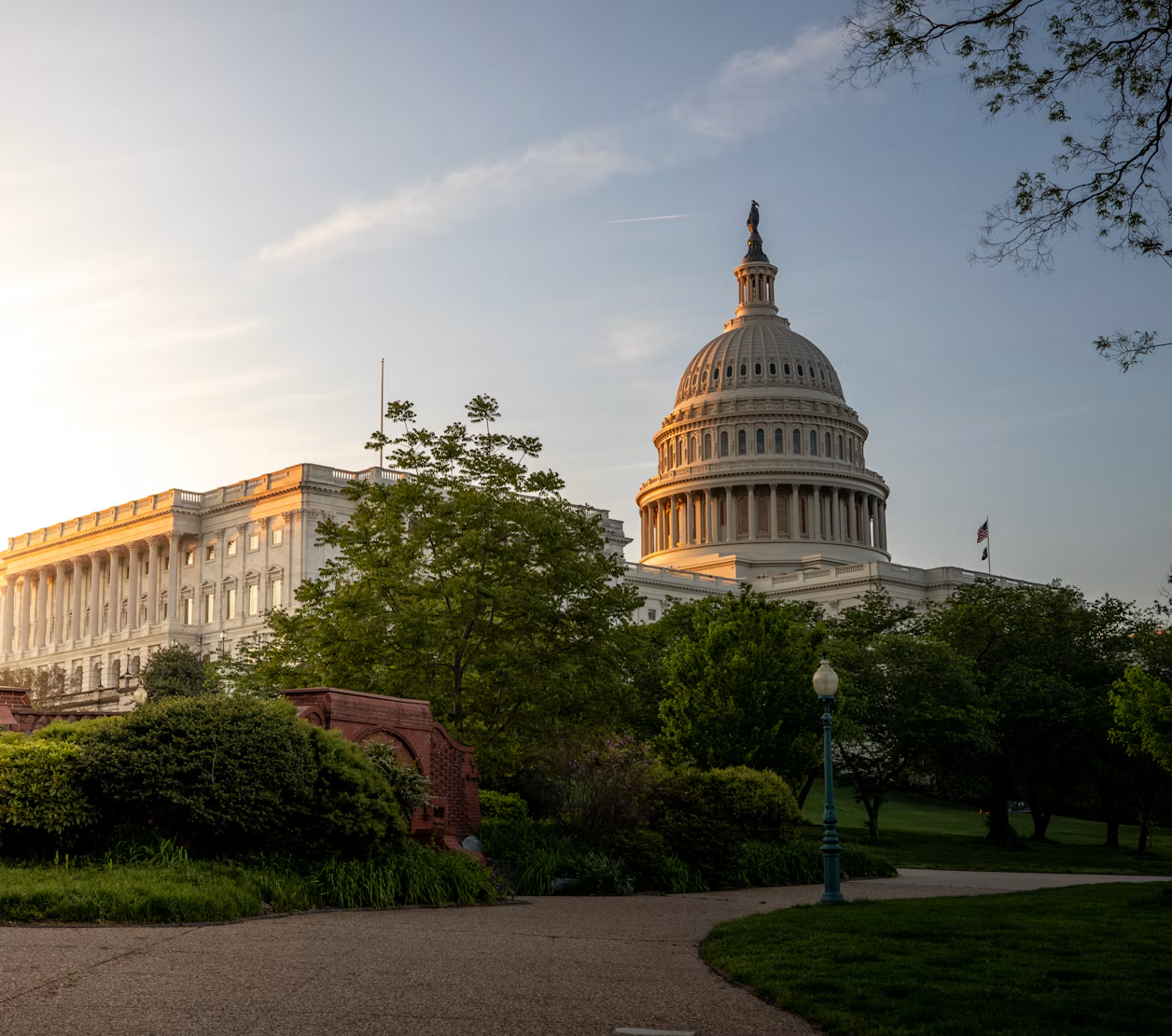
With it being our country’s semi-quincentennial anniversary (that’s 250 years!), we thought it would be appropriate to focus this year’s Grandparents Day theme on “America the Beautiful.”
I think it’s safe to say that our nation is not respected or appreciated as it once was. Many Americans take for granted our country and what it stands for:
- Freedom and liberty
- Individual rights
- Equality
- The American Dream
- The dare to believe that rule by law and rule by the people—a Republic—is possible.
After all, humans are notoriously complicated and difficult creatures, and therefore are notoriously complicated and difficult to govern. Most notably in Phaedrus and Republic, the Greek philosopher Plato famously taught that the human person, our soul, is constituted of three parts (see Jason’s excellent treatment of the topic here):
- Reason: pursues truth and thinks rationally
- Spirit: longs for honor and glory and virtue
- Appetites: seeks bodily pleasure in an undisciplined and unruly way
You can see this view practically implemented in our favorite stories:
- The Wizard of Oz: Lion (courage/virtue), Scarecrow (mind), Tinman (heart/desire)
- The Brother Karamazov: Ivan (mind), Dmitri (appetites), Alyosha (spirit/virtue/faith)
- Harry Potter: Harry (spirit), Hermione (mind), Ron (appetites)

The rightly ordered soul, for Plato, is achieved when one’s reason is empowered to rule the soul through virtuous character in order for one’s base and appetitive elements to be subdued.
Unfortunately, this is not the norm. The story of humanity is not one of reason, virtue, and order, but of slavery to our base instincts—our longing to gratify the flesh, as the Apostle Paul put it (see Gal. 5, Rom. 8).
How then could a republic ever work? How could people ever be trusted with the power to rule?
Founding Ideas of a Republic
This is where the brilliance of our Founding Fathers comes in. You see, the men who built this country—George Washington, John Adams, Thomas Jefferson, James Madison—were careful students of human nature. They knew their Plato, yes, but they also read Cicero, Locke, and Montesqui.

It was Cicero, the Roman statesman from the 1st century B.C., who laid the foundation for the separation of powers which is essential to our Constitution today. He was living in the final days of the Roman republic. Military power was growing concentrated in the hands of a few, political corruption had become the norm rather than the exception, competing political factions were becoming more and more prominent, and a man named Julius Caesar was growing in power and ambition.
Cicero longed to preserve his beloved republic, and as he thought about what that would require, he concluded that for government to be effective, stable, and just, it needed to deal wisely with human nature. In On the Republic, he advocated for a mix of the three basic forms of government:
- Strong central leadership (monarchy)
- Wisdom and prudence (aristocracy)
- Undeterred focus on the common good (democracy)
Taken by themselves, these forms of government are destined for corruption. Monarchs become tyrants. Aristocrats engage in self-dealings. And democracies devolve into mob rule.
But fashioned together into a single government that combines the virtues of each, the vision for a republic emerges.
If we had more time, I would tell you more about this story and how the founding and sustaining of our great country is not possible without the classical tradition, and by extension, classical education.
I would share about Locke’s ideas of individual rights and limited government, and Montesqui’s insistence on the separation of powers. Rest assured that all of these ideas were in the minds of our Founding Fathers. They knew what they were doing 250 years ago when they wrote our Constitution. They knew their history, and they knew what it would take for the American experiment to succeed.
The answer? It turns out that Plato provided it 2,500 years ago.
How a Republic Endures
For a republic to endure—a government that is truly marked by freedom, equality, and rule by the people—it is a non-negotiable for its citizens to be wise and virtuous, men and women with well-ordered souls, shaped by their forbears to get their appetitive and base desires under control through the guidance of reason and the power of virtue.
In other words, for a republic to endure, its citizens need to be freed, not merely from tyrants, but from themselves.
This, of course, is where the whole idea of a classical liberal arts comes from. “Liber” is the Latin word for freedom. The liberal arts were viewed to be the “freeing” arts because they liberated the mind and soul from falsehoods, vice, and domination of the appetites. To learn to read and write, think logically, speak with eloquence, and contemplate the universe through math and science is not merely a cognitive exercise. It is a moral one.

This is why C.S. Lewis calls humans “unregenerate little bundles of appetites” and why the whole purpose of education is not to create good bankers, electricians, or surgeons, but “good humans.” (Our English Syllabus, 1939 (Oxford lectures, 1938). In a society without goodness and virtue, there will be no banks, no hospitals, no power plants.
In other words, the pursuit of wisdom and virtue is essential for a republic to endure.
Classical Education for a Republic
And up until about 1900, this was the assumed purpose of education: the cultivation of wisdom and virtue for the next generation.
But gradually this all changed. Through thinkers such as John Dewey, William James, and Sigmeund Freud, American education became modernist and progressive, characterized by at least three priorities. As Robert Littlejohn and Charles Evans explain in Wisdom and Eloquence for Parents (Classical Academic Press, 2025), these entailed:
- Placing the student at the center of the educational process, displacing cultural tradition.
- Educating according to deterministic assessments of aptitude—college prep or vocational training.
- Training students, even ones that are college bound, primarily to function in an economy.
As if our human experience and worth could be reduced to our ability to hold down a job.
In sharp contrast, the classical liberal arts tradition treats the value of a human person holistically, infused with ultimately spiritually purpose. Solomon reminds us that the “fear of the Lord is the beginning of wisdom” (Prov. 9:10, ESV).
Exhortation for Freedom and Bravery
I belive that for our beautiful America to continue—and I truly believe it is beautiful—we need to continue to anchor ourselves and future generations to the founding vision of this country:
- Freedom: Not merely freedom from tyrants, but freedom to build and create, to raise children, to worship, and, yes, to live free of our own sinful appetites.
- Bravery: The courage and virtue to go against the grain. To live for Christ above all, to not compromise on our faith and values, but instead to do what is right, no matter the cost.
If we do this, and if we can pass on these values to our children, and if our schools can do the same, the future of our republic is exceedingly bright.
A Better Country
But even still, as believers, I must remind us that this world is not our home. We are pilgrims, the Book of Hebrews tells us, passing through as strangers and exiles, awaiting the heavenly city which God has prepared. We are to seek to the welfare of this city, even as we await our Savior’s glorious return.
For, at the end of the day, it is not the president, the governor, the House or the Senate that is in charge. We rejoice that the Lord alone is King.
Leave a Reply