
Tag: Aristotle
-
The Educational Renaissance Symposium 2021: A Digest
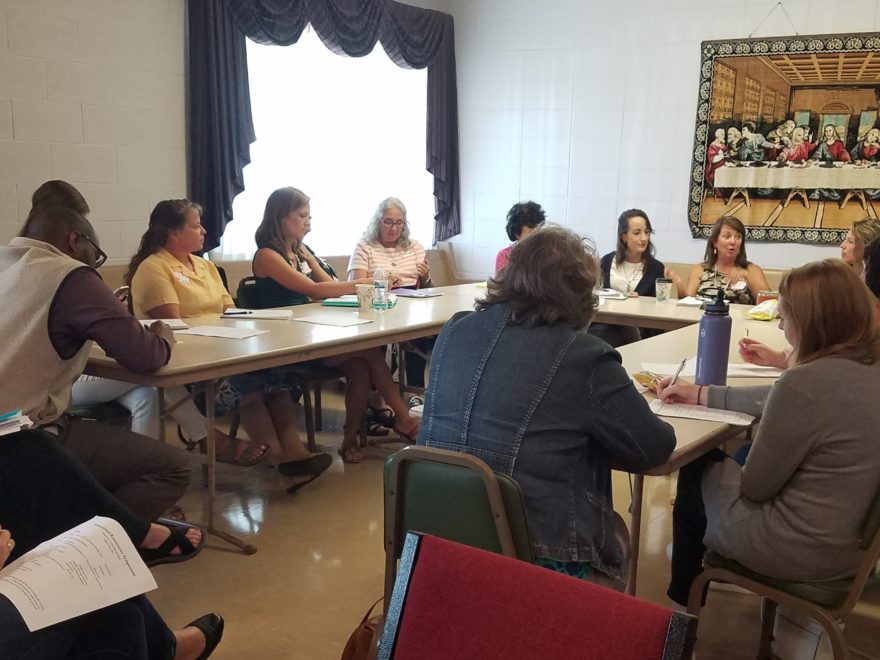
On Wednesday, August 4th we had our first annual Educational Renaissance Symposium hosted by Coram Deo Academy in Carmel, Indiana. It was exciting to welcome over sixty participants who heard keynote addresses from Educational Renaissance authors as well as attended great workshops by a variety of guests. The Symposium is a different kind of convention,…
-

The Value of Objective Value: C. S. Lewis on Renewing Education
No matter what age you or your children are, I highly recommend The Chronicles of Narnia by C. S. Lewis for summer reading. They are lighthearted yet full of depth. I am reading aloud The Silver Chair, the fourth book in the seven-book series. For those who know the general contours of the series, this…
-

Apprenticeship in the Arts, Part 1: Traditions and Divisions
The previous two articles have paved the way both for our discussion of Aristotle’s intellectual virtue of techne, artistry or craftsmanship, as well as the intellectual virtue of phronesis, practical wisdom or prudence. In a strict sense, the analogy between artistry and morality is aside from our central argument, which consists in working out the…
-

Practicing in the Dark or the Day: Well-worn Paths or Bushwalking, Artistry and Moral Virtue Continued
In my last article we explored the analogy between Aristotle’s intellectual virtue of artistry or craftsmanship (Greek: techne) and moral virtue, taking our cue from the Nicomachean Ethics book II. Along the way we discovered the foundation for these two types of excellence in habit development or the neural networks of the brain. Excellence, according…
-

Moral Virtue and the Intellectual Virtue of Artistry or Craftsmanship
It might seem strange after the paradigm delineated above to focus our attention back on intellectual virtues alone, just after arguing for the holistic Christian purpose of education: the cultivation of moral, intellectual and spiritual virtues. But it is impossible to do everything in a single series or book. The cultivation of moral virtues requires…
-
Aristotle’s Virtue Theory and a Christian Purpose of Education
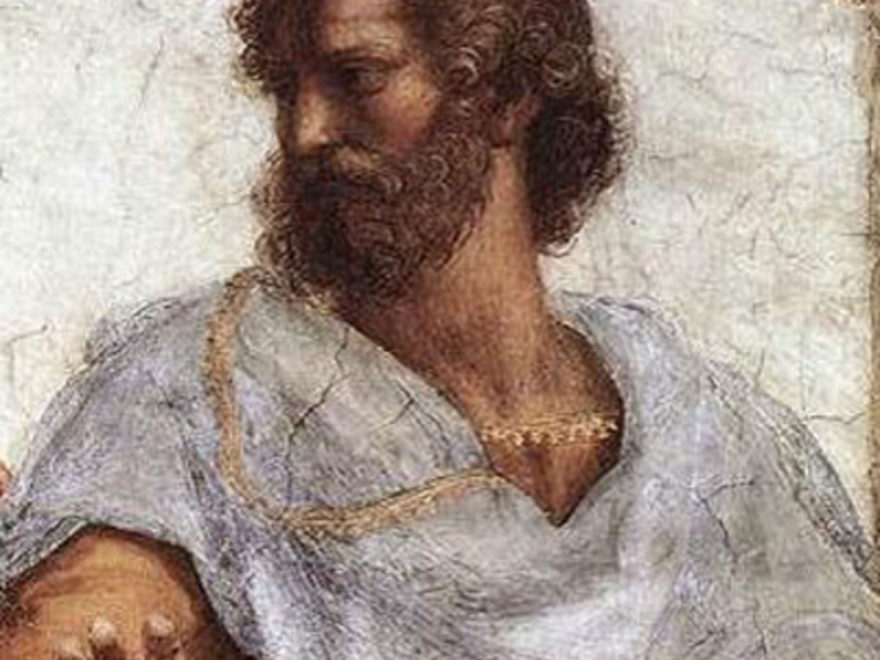
Up till now in this series I have evaluated Bloom’s taxonomy and mostly used Aristotle’s intellectual virtues as a foil in my critique. And so while I have, to a certain extent, defined and described Aristotle’s five intellectual virtues, alongside offering an outline snapshot of a classical Christian educational paradigm based on them, my explanations…
-

What Bloom’s Left Out: A Comparison with Aristotle’s Intellectual Virtues
In the last three articles in this series, I laid out the good, the bad and the ugly of Bloom’s Taxonomy. After the last two posts it is perhaps worth reaffirming the value of Bloom’s project. While I ultimately believe that Bloom and his colleagues may have done more harm than good, I do affirm…
-

When Bloom’s Gets Ugly: Cutting the Heart out of Education
Bloom’s Taxonomy cuts out the heart of education by cultivating bloated heads and shrivelled chests and leaving out man as maker and doer.
-

Human Development, Part 1: What Do You Have in Mind?
A sound pedagogy requires a good understanding of anthropology (the study of human beings including our nature, our biology, our behavior and our social patterns) and of epistemology (the study of the nature of knowledge and how humans experience and acquire knowledge). One way these key areas of study (anthropology and epistemology) converge pertains to…
-
Breaking Down the Bad of Bloom’s: The False Objectivity of Education as a Modern Social Science
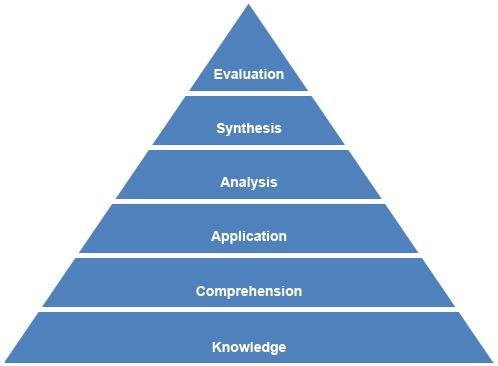
In the first two posts of this series (which I am reviving after a 6 months long hiatus) I proposed replacing Bloom’s Taxonomy of educational objectives with Aristotle’s intellectual virtues. The major flaw in Bloom’s taxonomy, which is a hierarchical categorization of educational goals in the cognitive domain, is that it privileges the bare intellect…