
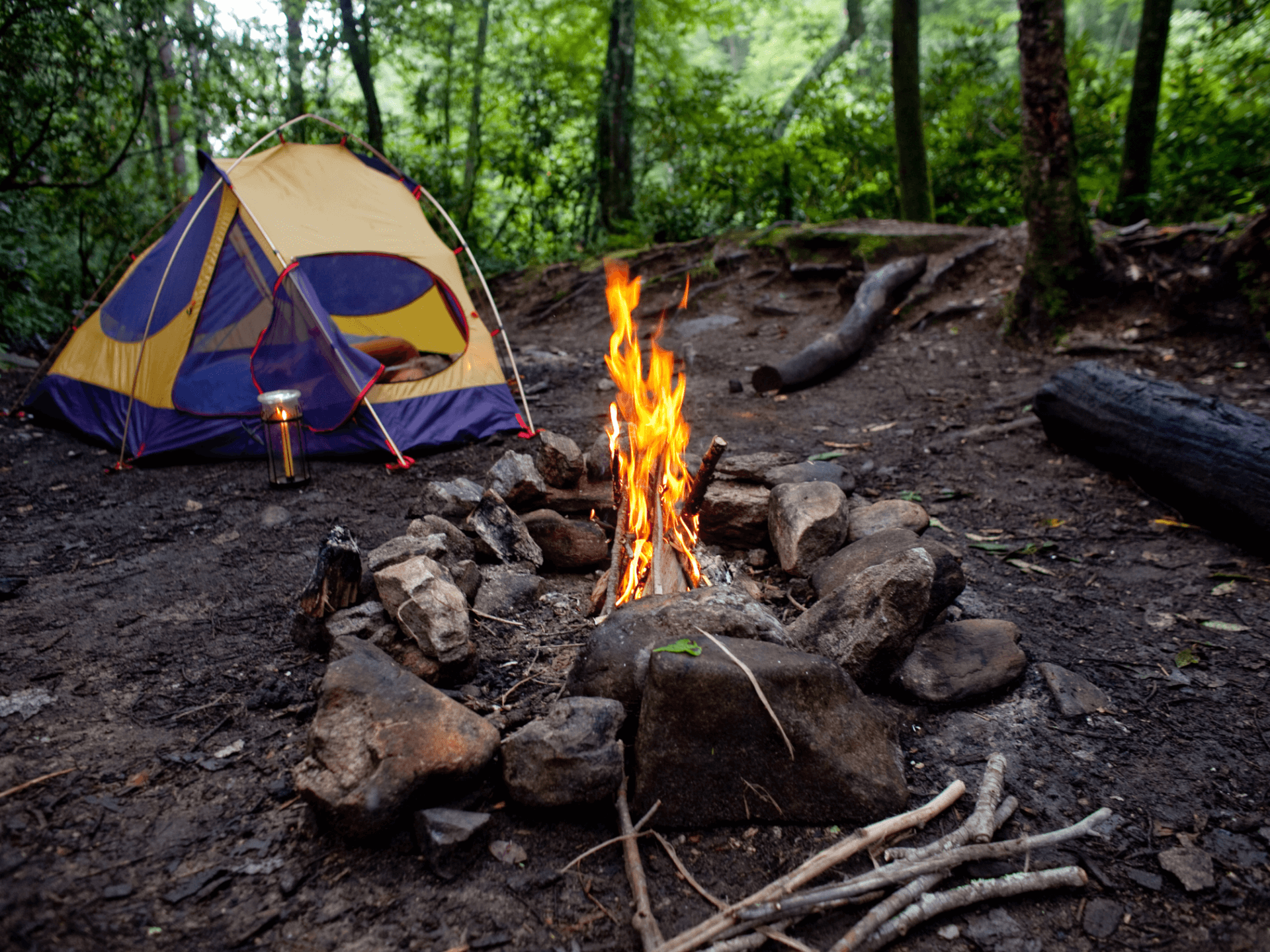
Earlier this fall, we packed up our van and went camping. There were six of us in total: my wife and I, and our four kids, ranging in age from 8 months to 7-years-old. As you can imagine, the kids were ecstatic. Other than the oldest, my kids had never been camping. But the longing to camp and all the adventure entailed—sleeping outside, encountering wildlife, being together as a family–seemed to be hard-wired into them as it was for me.
As we packed for the trip, it felt as though we might as well bring our whole house. The list of supplies seemed endless. Tents, sleeping bags, sleeping pads, pillows, flashlights, cooking utensils, paper supplies, garbage bags, food, drinks, bug spray, firewood, the list goes on. I have joked that the real thrill of camping is the satisfaction of being prepared for any and every eventuality. Campers are the ultimate preppers. If there is a tool or gadget or item that could be useful in some way at some point due to some circumstance, then it is worth buying and bringing.

Growing up, my family would go on short camping trips. I have vague memories of my parents pulling paper bags out of our car stocked with food and supplies. Our campground was composed of a large flat ground of dirt, a fire pit, and picnic table. Down a little ways was direct access to the lake for fishing and swimming. It was perfect.
Except at night when it would get cold. We would don warm pajamas and burrow ourselves in our sleeping bags. But for whatever reason, that never seemed to help. The crisp cold air would find its way into our tent, leaving us shivering as we tried to fall asleep. Then, in the middle of the night, when we finally did fall asleep, we would wake up wet. Were we sweating? No. It had started to rain.
At this point, you may be wondering: if the cold, rainy nights are primarily what you remembered about camping as a child, why do this to your children? Well, it was not all bad. I remember the beauty of the lake, the smell of the fire, and fun of sleeping together in one tent. There is something wonderful and satisfying about spending extended amounts of time outdoors, exploring the forest, hearing birds and bugs, swimming in the lake, losing track of time, learning to “rough it,” and making new memories as a family. It was with these positive ideas in mind that we decided to take our kids camping.
A Sound in the Night
On our trip, as we were preparing our kids for bed, everything was going according to plan: the tents were up, the fire was roaring, and the environment was peaceful. Until we heard it. A noise in the forest that sounded like the combination of an orangutan and a coyote. My kids looked at me and froze. “Dad, what was that?”
Now, as a dad, it is important to remember that you are the voice of security and reason in your kids’ lives. Fear and uncertainty is as contagious as the flu. At that moment, I truly had no idea what the noise was. And yet, somehow a voice came from my mouth that responded with confidence: “Oh, that? Just an owl.” My wife gave me the knowing look of “Oh, really?” and we moved a little quicker in getting the tents zipped up.
Fast forward a few hours and it is 1 o’clock in the morning. We had been sleeping for a few hours, when our baby decided it was time to practice his baby talk. Good annunciation, extended vocalization, etc. Then we heard the noise again. “Dad, is that the owl again?” “Yes.” “Dad, I need a drink of water and I left my water bottle on the picnic table. Can you get it?” Now I began asking myself if I really believed it was an owl. Suffice it to say, none of us slept quite as soundly the rest of the night. Except for our baby.
The Benefits of Camping
Overall, it was a good camping experience for our family and we plan to do it again next year. In fact, even if it was not so good, my wife and I are committed to the practice. Why? There are two main reasons.
First, the practice of camping aligns with our broader philosophy of parenting. My wife and I are committed to raising resilient children who are comfortable taking risks and trying new things. We want our kids to love the outdoors, be able to create their own fun, and develop skills with their hands.
In contrast, the current tendency of parenting is to coddle, that is, to protect children from challenges and hardships. We are told that our job as parents is to shield our kids from any and all forms of temporary pain.
However, it turns out that children grow strongest through challenges and hardships, from being told “no” to being sent outside to make their own fun. We are not doing any favors for our kids by protecting them from chores, boredom, and urgent care visits. The key to raising independent and resilient children is to give them opportunities to practice independence and resiliency, or grit.
When we camp, we are intentionally placing our children in an unfamiliar situation and supporting them along the way. These experiences, such as sleeping on the ground, encountering unknown wildlife, getting dirty, and eating simple camping foods, are teaching our kids that that hard things won’t kill them. It is okay to be uncomfortable and afraid at times. With preparation, encouragement, and support, it is possible to endure hardship and come out on the other side stronger and ready for another adventure.
In fact, this lesson is true for parents as well. While camping, we face the same challenges as our children, including the lack of sleep. It raises the question, “Why do this to yourself?”. The answer is that we want to grow in our resilience, our skill as parents, and our love for adventure as well.
Cultivating Real Joy and Satisfaction
Second, the practice of camping is a remedy for many of the ills of modern society. Contemporary culture has become addicted to the path of ease and comfort, and as a result, is encountering nothing short of a crisis of meaning. Anything that makes things easier and shortens wait times are accepted without a second thought. Related to this, we have become insulated from the outside world, exchanging it for the passive entertainment of screens. And I am not simply talking about children here. I am talking about myself and other adults.

Camping, as I have hopefully demonstrated above, is the practice of running in the opposite direction of ease and comfort. It forces one to be industrious, resilient, and independent. In the great outdoors, you have to provide for your own needs, including shelter and food. There isn’t a furnace to keep your body warm and a refrigerator to keep your food cold. If you want to stay warm, make a fire. If you want to keep your food cold, pack a cooler with ice.
Perhaps even deeper than an addiction to ease and comfort, I believe what plagues our present society can ultimately come down to a lack of patience. We rush from one thing to the next, constantly desiring to be entertained along the way. We cannot run an errand without listening to a podcast or wait in line without scrolling on our phones. We go for runs whilst listening to music and order groceries to be dropped off rather than doing the mundane work ourselves.
When we camp, we are courageously going against the grain, pursuing the remedy of time outdoors and growing in the power of delayed gratification. The result is a joy that is ultimately more satisfying and enduring than the quick dopamine hit of a screen or battery-powered toy. We are modeling for our children that the good life is not marked by endless pleasure, but the satisfaction of meaningful, even challenging, experiences. So the next time you are considering a trip for your family, go camping.
Leave a Reply